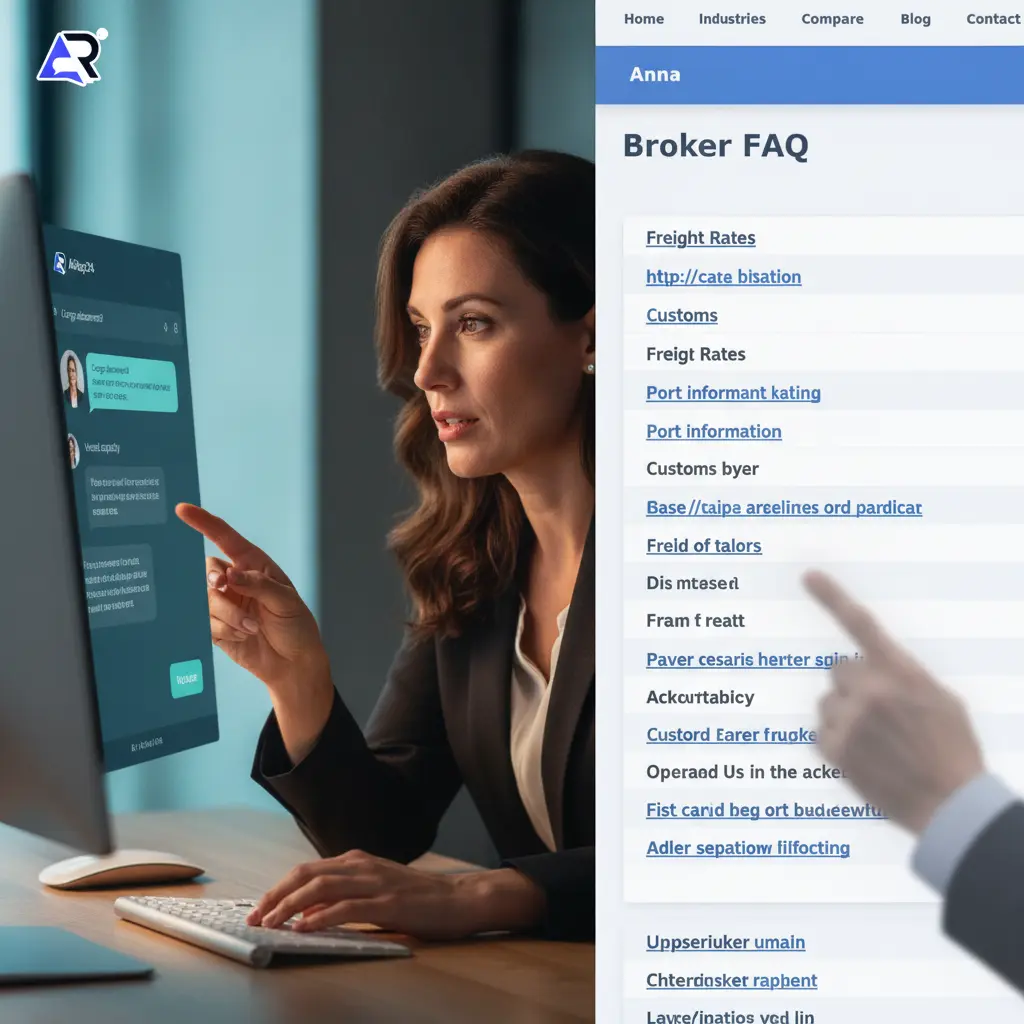
The Enduring Role of Traditional FAQ Pages
Frequently Asked Questions (FAQ) pages have long been a cornerstone of online customer support. They serve as a centralized repository for common inquiries, offering concise, pre-written answers. Their primary advantage lies in simplicity: they are straightforward to create and maintain for basic information that rarely changes, making them a cost-effective solution for addressing elementary customer queries.
FAQs are most effective for transactional questions, such as store hours, shipping policies, or basic product specifications. Users navigate these pages by scanning headings or using a simple search function. While effective for simple information retrieval, the static nature of an FAQ means it cannot engage in a dialogue, adapt to nuanced queries, or provide personalized assistance based on user context.
Businesses often implement FAQs to reduce the volume of repetitive support tickets, allowing customers to self-serve for common issues. However, if a customer's question deviates even slightly from the exact wording or scope of the pre-defined answers, an FAQ page quickly reaches its limitations, often leading to frustration and the eventual need for human intervention.
Embracing Conversational AI Assistants for Dynamic Support
In contrast to static FAQs, a conversational AI assistant like AiRep24 offers a dynamic and interactive approach to customer support. Instead of simply presenting information, it engages users in a natural language dialogue, striving to understand the intent behind their questions and provide contextually relevant answers in real time. An AI assistant builds its knowledge base from configured website or store content, allowing it to interpret a wide array of questions, even when phrased differently.
This capability enables it to go beyond simple keyword matching, offering a more human-like interaction that can guide users through complex processes or offer personalized recommendations. The core strength of an AI assistant lies in its ability to adapt and learn from interactions. It can provide follow-up questions, clarify ambiguities, and direct users to specific product pages or resources more effectively than a static list of questions and answers.
This interactive nature is crucial for enhancing the overall customer experience and improving the efficiency of information delivery.
For the related decision, see Automated Knowledge Base.
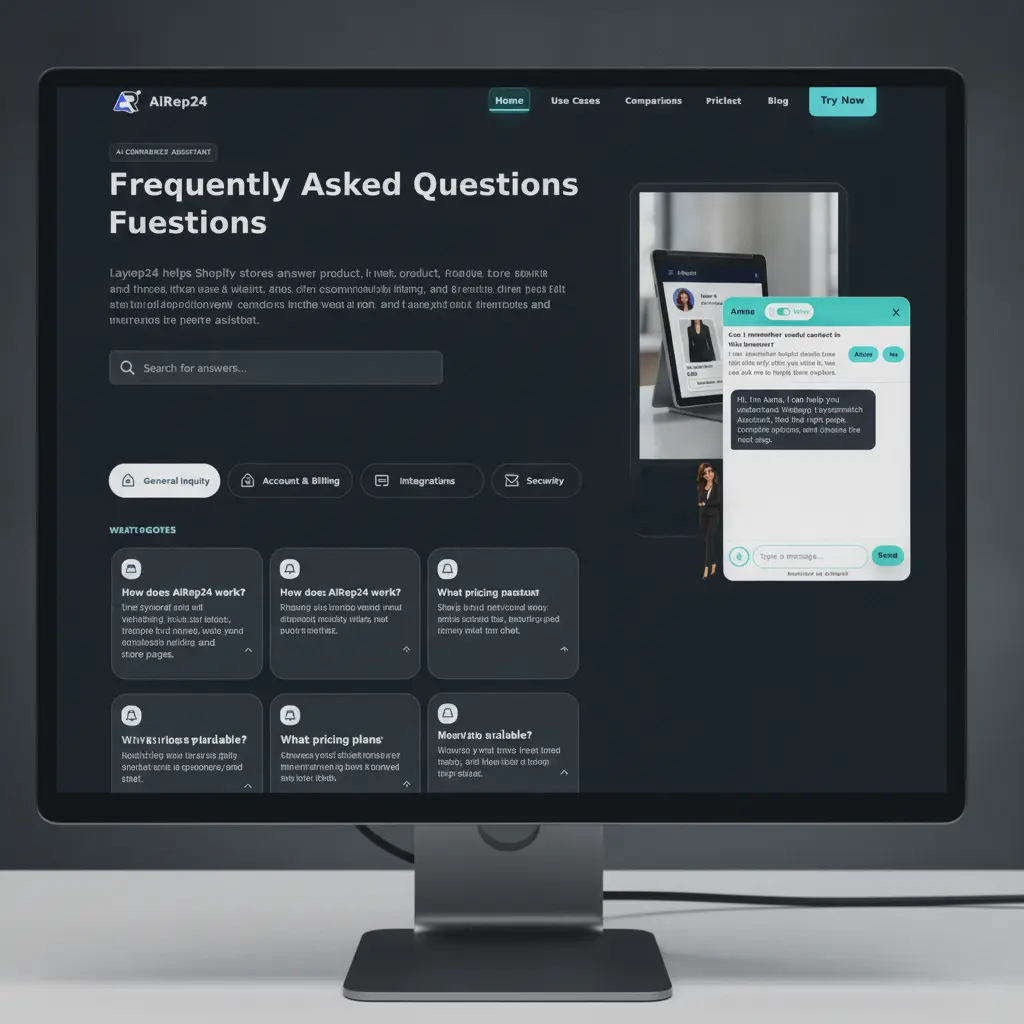
User Experience: Static Lookup Versus Dynamic Conversation
The fundamental difference between an FAQ and an AI assistant is the user experience they provide. With an FAQ, the user is solely responsible for finding the answer. They must sift through categories, read through lists, and formulate their own search queries, often requiring multiple attempts to locate the desired information. This can be time-consuming and inefficient if the question is not perfectly aligned with the FAQ's structure.
An AI assistant, on the other hand, shifts the burden of information retrieval from the user to the system. Users can simply ask their question in plain language, and the assistant will interpret it and provide a direct answer or guide them through a conversational flow. This dynamic interaction simulates a conversation with a human agent, leading to a more intuitive and less frustrating experience.
The ability of an AI assistant to maintain conversational context means it can build upon previous interactions, remembering details and offering more precise assistance. This level of engagement significantly elevates the user experience, making problem-solving quicker and more satisfying, particularly for complex or multi-step inquiries.
Content Management and Keeping Information Current
Maintaining an accurate and up-to-date FAQ page can be a labor-intensive process. Each new piece of information or policy change requires manual updates to relevant questions and answers, a task that can become overwhelming for businesses with frequently evolving products or services. Stale or incorrect information on an FAQ page can quickly erode customer trust and lead to increased support tickets. An AI assistant streamlines content management through its automated knowledge base.
AiRep24 builds a knowledge base from configured website or store content, meaning that as your website or product pages are updated, the assistant's understanding of the information can also be refreshed. This significantly reduces the manual effort required to keep customer-facing information current and consistent. This automation not only ensures accuracy but also improves scalability.
As a business grows and its information library expands, an AI assistant can efficiently integrate new data without a proportional increase in manual maintenance efforts. This allows businesses to focus resources on creating valuable content rather than repeatedly updating static pages.

Addressing Complex Queries and Exceptional Cases
One of the most significant limitations of an FAQ page is its inability to handle complex or unique customer queries. If a question is not explicitly listed, or if it requires a nuanced understanding of multiple factors, an FAQ cannot provide a satisfactory response. This often leads to customers abandoning the FAQ and seeking human assistance, which can strain support teams. An AI assistant is designed to manage a broader range of query complexity.
While it excels at answering common questions, it can also interpret less straightforward inquiries, ask clarifying questions, and, if necessary, provide options for further assistance. For instance, AiRep24 can notify operators in Telegram, allowing human agents to manually decide whether to intervene for complex or sensitive cases. This capability for escalation ensures that customers always have a pathway to resolution, even when the AI assistant cannot fully resolve the issue independently.
It acts as a smart first line of defense, deflecting routine questions while efficiently routing unique or critical inquiries to the appropriate human expert, optimizing both customer satisfaction and operational efficiency.

Enhancing Accessibility and Richer Interactions
Traditional FAQs are limited to text-based interactions, primarily accessible through reading. While effective for many users, this format may not cater to all preferences or accessibility needs. Customers with visual impairments, or those who simply prefer verbal communication, may find static text pages less convenient or even unusable. AI assistants, particularly those with advanced capabilities, can offer richer and more accessible interaction methods.
For example, AiRep24 supports voice questions and answers when voice is enabled for the assistant, providing an auditory interface for users. This enhances convenience for users on the go or those who prefer speaking their questions. Furthermore, many AI assistants can be integrated across various digital channels, from website widgets to messaging apps, offering consistent support wherever the customer is.
This multi-channel presence and diverse interaction methods provide a more inclusive and flexible customer service experience, moving beyond the confines of a single web page.
For the related decision, see Voice Questions Answers.
Strategic Implementation: Aligning Solutions with Business Goals
Choosing between an AI assistant and an FAQ ultimately depends on your specific business goals, customer needs, and available resources. For businesses with a small volume of highly repetitive, simple questions and limited budget, a well-maintained FAQ page might suffice as an initial solution to basic information provision.
However, for organizations aiming to enhance customer engagement, reduce the burden on support staff, and provide a seamless, personalized experience, an AI assistant offers a more robust and scalable solution. It is particularly beneficial for businesses with complex products, diverse customer queries, or a desire to automate a significant portion of their customer interactions. A strategic approach often involves integrating both.
An FAQ can serve as a quick reference for the absolute most common and stable information, while an AI assistant handles the bulk of dynamic, complex, and personalized interactions. This hybrid model leverages the strengths of both systems to create a comprehensive and efficient customer support ecosystem.