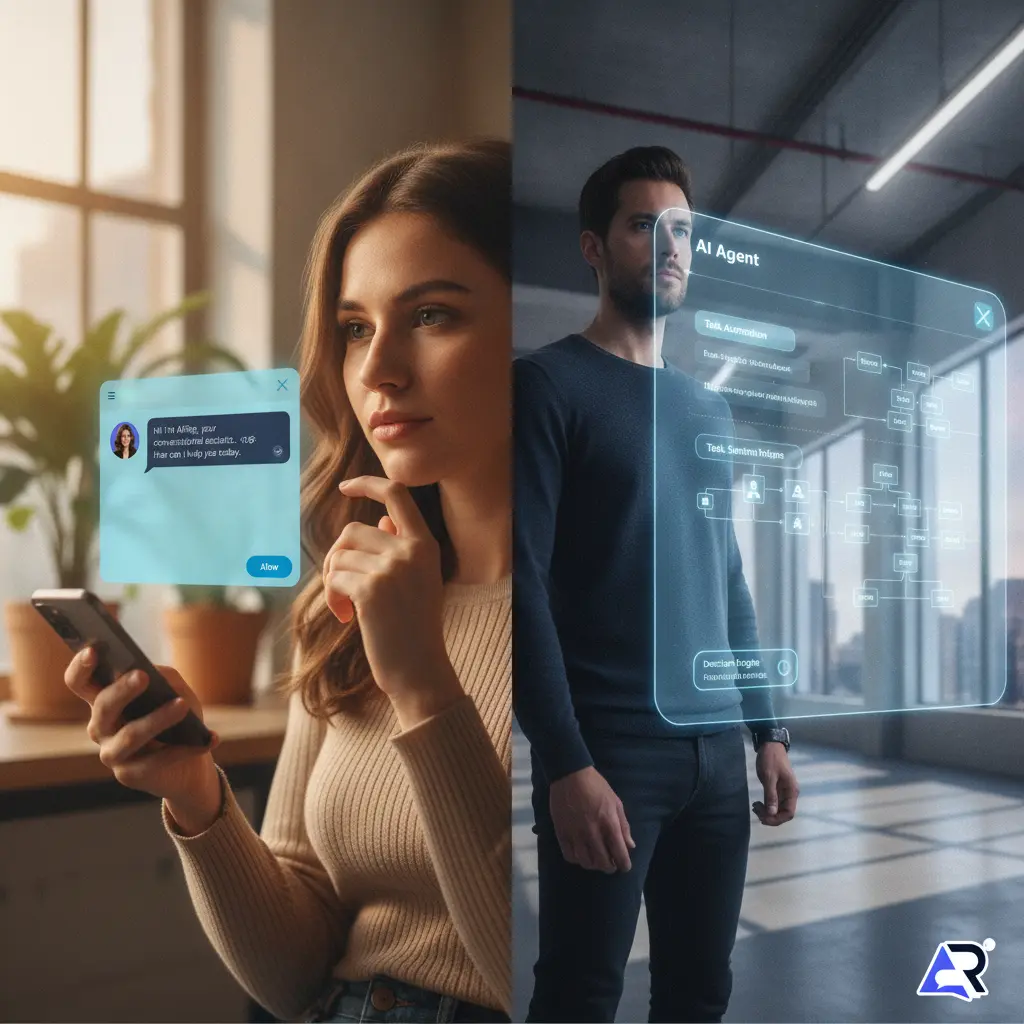
Defining the AI Chatbot
An AI chatbot is a software application designed to simulate human conversation through text or voice. Its primary function is to respond to user queries based on a set of programmed rules, scripts, or trained data. These systems are often developed to handle specific, repetitive tasks and provide quick answers to frequently asked questions. Chatbots are typically reactive, meaning they wait for a user's input before generating a response.
Their knowledge is often confined to the information they have been explicitly fed or configured to access. While effective for automating basic support interactions, their ability to deviate from their programming or learn from novel situations is limited. For example, a chatbot might guide a customer through a return policy step-by-step or provide information about product availability.
Defining the AI Agent
An AI agent, in the context of customer service and automation, is a more sophisticated system designed for autonomous action and decision-making. Unlike a chatbot, an AI agent operates with a goal-oriented approach, capable of understanding user intent beyond simple keywords, maintaining context over extended interactions, and executing complex tasks across multiple integrated systems. AI agents are often proactive, able to anticipate user needs or identify potential issues.
They possess enhanced learning capabilities, allowing them to adapt and improve their performance over time through machine learning and natural language understanding. This enables them to manage intricate workflows, personalize experiences, and even initiate actions to achieve a defined objective, such as resolving a service ticket without human intervention or offering tailored product recommendations.
For the related decision, see Automating FAQ Answers.
Core Differences in Functionality and Autonomy
The fundamental distinction between an AI chatbot and an AI agent lies in their level of autonomy and complexity of function. Chatbots are generally constrained by their programming; they excel at following linear conversations and retrieving specific pieces of information. They are tools for automating predictable interactions. In contrast, AI agents are built to understand, reason, and act more independently.
They can interpret nuances in language, retain information across multiple turns in a conversation, and dynamically adjust their approach based on new data. This allows them to handle ambiguous requests, troubleshoot problems, and perform actions that require integration with various backend systems, such as processing a refund or updating customer account details.
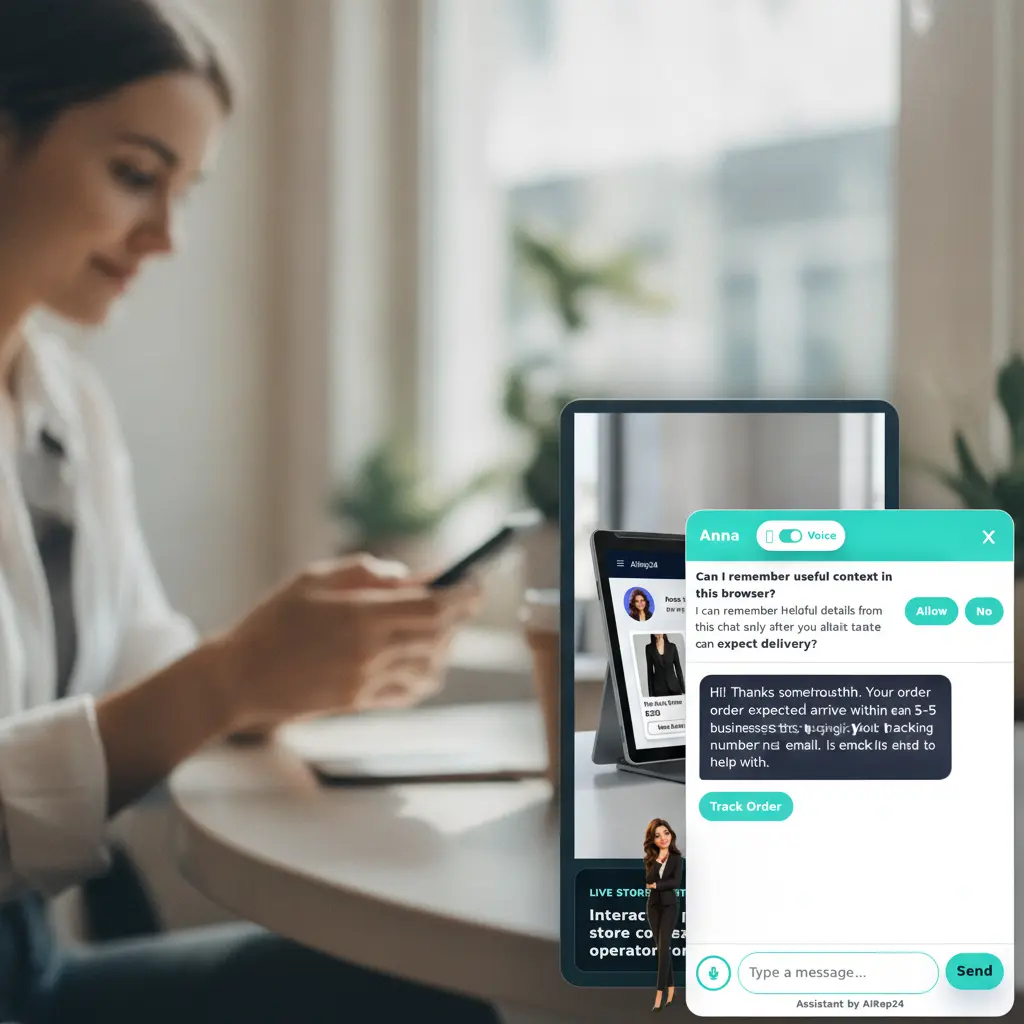
The system's ability to build a knowledge base from configured website or store content supports this deeper functionality, as seen with AiRep24, enabling it to act more as an agent for specific customer service tasks. For instance, AiRep24 can notify operators in Telegram; operators decide manually whether to intervene, illustrating a blend of automated assistance with human oversight, a characteristic often found in sophisticated agent deployments.
Intent Understanding: Chatbots match keywords; agents comprehend underlying goals. Context Retention: Chatbots often reset context; agents maintain it throughout an interaction. Task Execution: Chatbots provide information; agents perform multi-step actions. Learning & Adaptation: Chatbots rely on updates; agents learn and evolve from data.
Typical Applications in Business and Customer Service
AI chatbots are widely deployed for first-line customer support, answering common questions about business hours, product features, or return policies. They help reduce the workload on human agents by handling repetitive queries, ensuring customers receive immediate responses for basic information. This makes them ideal for automating FAQ answers and providing after-hours customer support.
AI agents, on the other hand, are suitable for more complex scenarios where problem-solving and personalized service are critical. They can be used for advanced troubleshooting, guiding customers through intricate setup processes, or offering product recommendations based on browsing history and purchase patterns. An AI agent might proactively reach out to a customer whose order is delayed with an update and offer alternative solutions, demonstrating a higher level of engagement and problem resolution.
AiRep24's capability for product recommendations and its support for voice questions and answers when voice is enabled for the assistant, moves it closer to agent-like functionality in delivering a richer customer experience.

Advantages and Limitations of Each Approach
Chatbots offer advantages in cost-effectiveness and scalability for basic support. They can handle a large volume of simple inquiries simultaneously, providing consistent, immediate responses. Their limitations become apparent when faced with questions outside their predefined scope or when a user's query requires nuanced understanding or multi-system integration. They often resort to handing off to human agents when they encounter complexity.
AI agents offer superior customer experience through personalization and comprehensive problem resolution. Their ability to learn and adapt means they can improve over time, potentially reducing the need for human intervention in increasingly complex cases. However, developing and maintaining an AI agent requires significant investment in data, training, and integration with existing systems.
The setup process for an AI agent is typically more involved than for a basic chatbot, requiring robust data synchronization and continuous monitoring to ensure optimal performance. AiRep24 builds a knowledge base from configured website or store content, which provides the foundation for such agent-like capabilities, reducing the manual effort of knowledge engineering.

Implementing an Effective AI Solution
Choosing between an AI chatbot and an AI agent, or a hybrid model, depends on specific business goals, available resources, and the complexity of customer interactions. For businesses with a high volume of repetitive questions and a clear need for instant, rule-based responses, a chatbot might be sufficient. This could be useful for automating basic inquiries for an ecommerce brand or SaaS app.
If the objective is to provide deep, personalized support, automate complex workflows, and reduce customer service tickets through proactive resolution, then investing in AI agent capabilities is more appropriate. This often involves integrating with various business tools and ensuring the AI can access and process diverse data sources.
Solutions like AiRep24, which offer features like delivery and return policy answers and multi-language support, facilitate building more comprehensive, agent-like customer interactions. Regardless of the choice, successful implementation requires careful planning, including identifying specific use cases, gathering relevant data for training, and establishing clear metrics for success.
Continuous monitoring and iteration are essential to refine the AI's performance and ensure it meets evolving customer expectations.
For the related decision, see Telegram Operator Handoff.
The Evolution Towards Hybrid Models
The distinction between chatbots and agents is becoming increasingly fluid as AI technology advances. Many modern solutions are adopting a hybrid approach, combining the efficiency of rule-based chatbots for common queries with the intelligence and autonomy of AI agents for more challenging interactions. This allows businesses to leverage the strengths of both, providing a seamless customer experience that scales efficiently.
In a hybrid model, a chatbot might handle initial inquiries and quickly resolve simple questions. If the conversation progresses to a point where a deeper understanding of context, proactive problem-solving, or multi-system action is required, the interaction can seamlessly transition to an AI agent component. This ensures that customers receive appropriate levels of support without unnecessary handoffs or frustrating delays, ultimately improving product discovery and overall satisfaction.